Chhattisgarh Train Collision — Bilaspur, November 2025
What happened
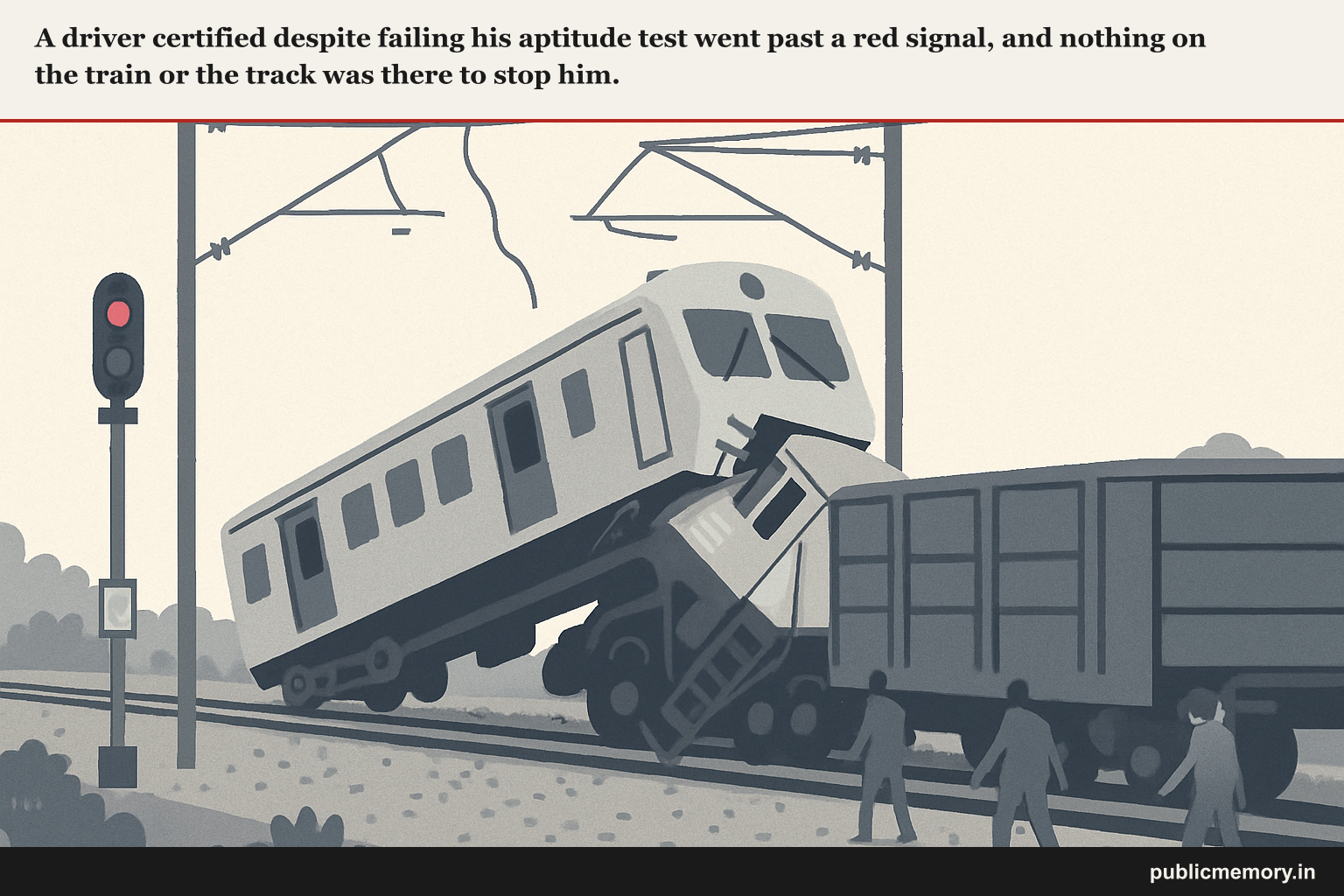
On the afternoon of 4 November 2025, a MEMU local passenger train — train 68733, running from Gevra Road to Bilaspur — ran into the back of a goods train that was standing still on the same line, between Gatora and Bilaspur stations in Chhattisgarh. The impact was so violent that one passenger coach was thrown up on top of a freight wagon and the front of the train was crushed. Twelve people were killed, including the train's own driver, and 19 passengers were injured, nine of them seriously.
Toll
Deaths
12
Injured
19
Grievously injured
9
Root cause
What directly caused this incident
Confirmed by CRS inquiryThe passenger train went past a red signal and hit the rear of a goods train standing ahead of it on the same track. Indian Railways calls this a SPAD — Signal Passed At Danger. The Railway Board's first assessment on the day of the crash said the train "seems to have overshot a red signal"; the statutory inquiry by the Commissioner of Railway Safety, South Eastern Circle, later recorded the cause as an "error in train working" and found that the crew failed to control the train at the right place before the danger signal. The same inquiry found that the driver on duty had sat the mandatory aptitude test on 9 June 2025 and failed it, yet was still issued a competency certificate to run MEMU trains — and that during the run he repeatedly telephoned a chief loco inspector for guidance on minor matters, which the inquiry read as a sign that he did not know the job well enough. Nothing on the train or on the track could stop it once the signal was passed: this section and this train had no automatic train protection system fitted. The CRS findings are provisional and still under examination by the government.
In short: A driver who had failed his aptitude test was certified to run the train anyway, went past a red signal, and no system on board or on the track was there to stop him.
Systemic failures
These failures existed before this incident — and will cause the next one unless the system changes.